
A fence has two jobs. It needs to work – keeping your yard private, your dog in, and uninvited guests out. And it needs to look right – proportionate to your home, suited to the street, and something you’re happy looking at every day. Fence height sits at the centre of both.
Get it wrong and you’re either left exposed or stuck with something that dominates the block.Get it right and the fence quietly does its job without drawing attention to itself. Here’s how to land on the right height for your Adelaide property.
What the Rules Actually Say in South Australia
As a general rule, standard residential fences between 1.2m and 1.8m don’t require council approval. Once you go above 2.1m, you’ll need to apply. Masonry fences – brick, rendered block, stone – have a lower threshold: anything over 1m requires approval. Corner blocks have additional restrictions; a fence over 1m within 6 metres of a road intersection will need sign-off too, as visibility at intersections is a safety consideration councils take seriously.
Regulations also vary between councils across Greater Adelaide, so it’s always worth a quick check with your local council before committing to a height. A good fencing contractor will know this and factor it in from the start.
Common Fence Heights & What They’re Best For
- 0.9m – 1.2m (front boundary / street-facing): Low fences define the boundary without blocking street views. It gives the home curb appeal without closing it off.
- 1.5m (semi-private side or rear): A middle ground that offers partial screening. Works well on sloping blocks where a taller fence would look heavy.
- 1.8m (full privacy, side and rear): The most popular height for suburban Adelaide backyards. It’s the standard ‘adequate fence’ recognised under SA.
- 2.1m (maximum without approval): Suited to properties needing extra security or noise reduction – think busy roads, corner blocks with foot traffic, or homes with pools.
Height and Aesthetics: Getting the Proportion Right
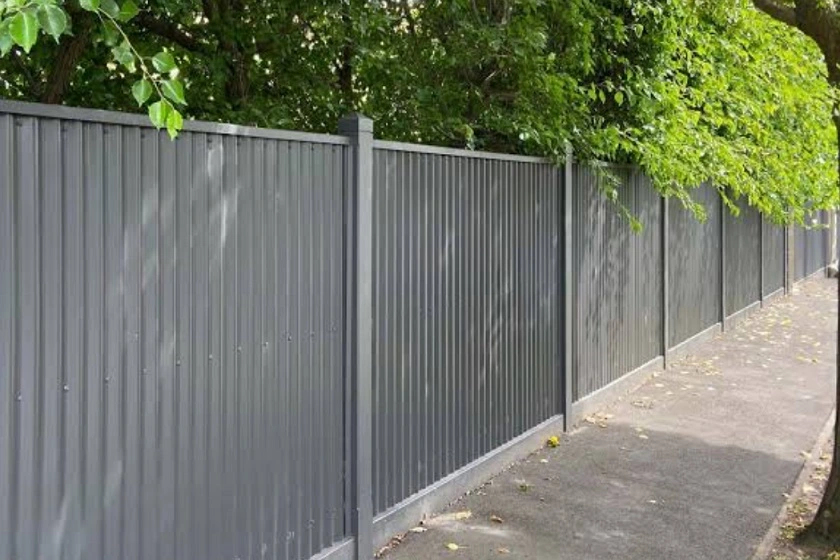
A fence that’s technically the right height can still look wrong if it doesn’t suit the block or the home. A 1.8m Colorbond fence on a narrow inner-city block can feel imposing. The same height on a wide suburban lot barely registers.
As a rule of thumb, side and rear fences can sit at full privacy height without much visual impact. Front fences are more visible and generally look better kept lower, with the style of the fence doing more of the aesthetic work than the height. If you want to screen a front yard without going above 1.2m, a well-chosen timber or tubular design can give the impression of enclosure without walling the property off.
On sloping blocks – common across Adelaide’s inner north, Hills face, and southern suburbs – stepped or raked fencing keeps heights consistent with the slope rather than creating awkward gaps at the base or towering sections at the high end.
Does the Material Affect the Right Height?
Yes – both visually and legally. Colorbond and timber at 1.8m feel solid without being heavy. Tubular steel at the same height still reads as open, making it a better option where you want height without visual bulk – front fences, especially. Masonry sits in a different category entirely; because of its weight and permanence, the approval threshold kicks in lower (above 1m).
Not Sure What Height Is Right for Your Block?
At Master Landscaping Adelaide, we’ve installed fencing across the city and suburbs – from tight inner-city lots to wide-open outer suburban blocks. We understand how Adelaide’s council zones, block types, and conditions affect what works and what’s permitted.
Contact us for a free on-site consultation and quote. We’ll respond to you within 24 hours.